
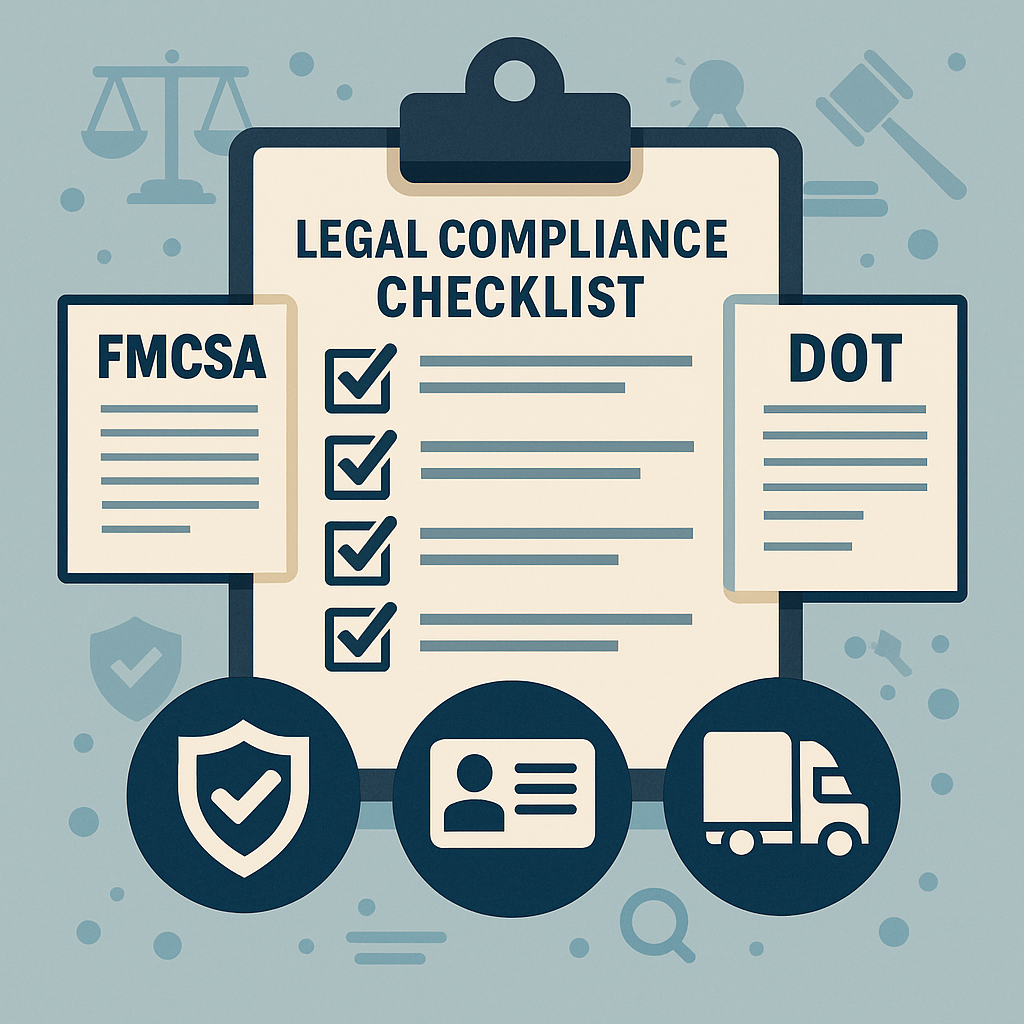
The foundation of modern fleet management is the legal compliance in the recruitment and onboarding of truck drivers. Knowing, and understanding, the compliance directives to the fullest protects your fleet not only from federal fines but also teaches your drivers to be more responsible and professional. Whether these are new CDL graduates or long-time contractors, the policies and procedures you integrate will Automate the application, background check, training, and documentation ensuring all of them are rigorous and meet the requirements for safety and legality. In this guide, we’ll provide you with the necessary tips and suggestions for easily adapting your hiring process to FMCSA and DOT compliance requirements and for laying a solid basis for safety, without making the driver’s first days unduly complicated. Adding partners such as Trucking Talent as a resource can bolster this strategy.
1. Getting Acquainted With the Regulatory Landscape (Legal Compliance Basics)
Understanding and interpreting federal and state regulations is the first step toward legal compliance. The Federal Motor Carrier Safety Administration (FMCSA) is responsible for setting essential guidelines in 49 CFR parts 380, 382, 391, and 395, which deal with issues such as entry-level training, drug and alcohol testing, driver qualification files, and hours of service. As of June 2025, FMCSA newly published rules regulate medical examiner certifications more strictly; the results should now be sent electronically via the National Registry by certified medical examiners. Also, they must pass English on-the spot-road-side tests with non-compliance orders. In addition to federal laws, states may have additional rules, so check with your state’s DOT website for intrastate commerce specifications regarding age requirements and documentation.
2. Pre-Hire Screening & Documentation (Truck Driver Recruitment Checklist)
A good pre-employment screening program brings only competent candidates for onboarding. The key points to be covered are:
- Application & Consent: Have an application completed by the candidate and signed release for Motor Vehicle Records (MVR) as well as consumer reports under Fair Credit Reporting Act (FCRA).
- Identity Work Authorization: As per I-9 regulations confirm work eligibility and keep copies of accepted identity and employment authorization documents.
- EEOC Compliance: Arrange job advertisements and interviews in a manner that would not seem to discriminate; observe applicable “ban-the-box” timing rules.
- Qualification Review: The first step is confirming that every candidate must have a valid CDL, the right endorsements, and the set minimum age and driving experience.
- Background Checks: Start searches for criminal history and Clearinghouse queries in order to find out any potential drug and alcohol violations.
This powerful checklist helps to minimize problems and makes the fast-track from candidate to driver shorter.
3. Driver Qualification File’s Construction (DQF)
According to 49 CFR 391.51, motor carriers are required to have a Driver Qualification File (DQF) for every driver they hire. Required components are:
| Document | Description | Regulation |
| Application for Employment | Driver’s application, including release authorizations for MVR and background checks. | 49 CFR 391.21 |
| Motor Vehicle Records (MVR) | State driving history reports from each jurisdiction held in the past three years. | 49 CFR 391.23 |
| Road Test Certificate/Skills Test | Certification of driver’s proficiency via road skills test or equivalent experience. | 49 CFR 391.31 |
| Medical Examiner’s Certificate | Valid medical card submitted electronically by the examiner after FMCSA registry update. | 49 CFR 391.43 |
| Drug & Alcohol Clearinghouse Report | Clearinghouse status indicating prohibited or not-prohibited driving status. | 49 CFR 382.401 |
| Annual Review of Driving Record | Annual self-certification and review of the driver’s MVR and medical status. | 49 CFR 391.25 |
Having an up-to-date, accurate DQF is not just a compliance issue, it is an excellent way to facilitate successful DOT audits and internal checks.
4. Entry-Level Driver Training & Endorsements
FMCSA’s Entry-Level Driver Training (ELDT) regulations establish specific training conditions for the first time CDL students and those who will be seeking more endorsements (passenger, school bus, hazmat). Some key points are:
- Training Provider Registry (TPR): Training should be held by FMCSA-approved providers, and they need to be found listed on the TPR.
- Curriculum Requirements: The training should comprise of both theory and behind-the‑wheel instruction based on license class and endorsements.
- Record Integration: Completed courses are to be recorded in the FMCSA TPR, and training certificates for the DQF must be collected.
Failure to fulfill ELDT standards may lead to the invalidation of tests and violation of compliance. You may also embed ELDT modules into your onboarding program to strengthen the understanding of operating safely and lawfully.
5. Background Checks & Substance Use Compliance
A thorough background check not only lessens the risk but ensures adherence to all safety protocols.
- Motor Vehicle Records: Obtain MVRs regularly to keep track of drivers including any recent violations, suspensions, or revocations.
- Criminal History: As per company policy and state law, fingerprint‑ or name‑based background checks should be conducted.
- FMCSA Clearinghouse: Verify if the candidate is “prohibited” due to drug or alcohol violations through the Clearinghouse and follow the protocols for the return‑to‑duty with driver operations.
- DOT Drug & Alcohol Testing: Through pre‑employment, random, post‑accident, and reasonable‑suspicion tests, a zero‑tolerance policy should be maintained in line with 49 CFR 382.
These checks not only comply with federal requirements but also depict your commitment to a safety‑prioritized culture — a standard upheld by trusted freight driver staffing solutions.
6. The Significance of Medical Exams & Certification Process
For holders of CDL, medical qualifications are imperative. The new regulation apparatus enacted recently exempts the paper trail making the process of electronic submission of physicals to FMCSA’s National Registry possible. Therefore medical examiners are not able to falsify the documents. Recommendations include:
- Certified Medical Examiners: Engage only with examiners listed in the National Registry for DOT physicals.
- Electronic Recordkeeping: Keep digital copies of Medical Examiner’s Certificates and set up reminders for the nearing expiration dates.
- Periodic Reviews: Screen drivers for any additional health complications such as diabetes or cardiovascular diseases.
- Accommodation Documentation: For instance when an applicant qualifies for medical waivers {{ hearing or vision ) document FMCSA exemption approvals in the DQF.
Keeping medical compliance current ensures driver protection and minimizes carrier liability.
7. Designing a Compliant Onboarding Program
Effective onboarding aligns legal requirements with practical training:
- Compliance Orientation: Introduce FMCSA and DOT regulations, emphasizing hours‑of‑service limits, ELD usage, and safety protocols.
- Safety Culture Training: Cover accident reporting procedures, incident command, and emergency response plans.
- Mentorship: Pair rookies with experienced drivers for hands‑on guidance and performance evaluation.
- Documentation Sign‑Offs: Collect signed acknowledgments for company policies, drug‑testing consents, and safety manuals.
- Progress Tracking: Use digital platforms to log training completion, evaluations, and feedback for real‑time visibility.
By weaving compliance into each touchpoint, carriers create drivers who are informed, prepared, and audit‑ready from day one.
8. Keeping records, being audit ready and CSA scores
The main way to stay compliant and to be a game changer is to accurately keep track of the data:
- Digital DQF Management: Files stored in a secure, cloud-based place can be audited with absolute trust.
- Internal Audits: Regularly check the DQF completion rates, training logs, and testing results.
- CSA Monitoring: Your Compliance, Safety, Accountability (CSA) figures can be monitored through FMCSA’s Safety Measurement System (SMS). When you manage to drop your CSA numbers, there will be less audit envy and it can also be a reason for a low price of insurance.
- Retention Policies: The minimum time for keeping records is three years for MVRs, five years for drug and alcohol tests, and even longer where the situation demands due to state law.
Regular record audits and CSA monitoring are the only things your carrier needs to be ahead of regulatory inspections.
9. Embracing Technology and Practicing the Best Standards
The expenditure in compliance technology directly reflects the adoption of a general pattern of ease.
- Applicant Tracking Systems (ATS): The applicant screening, FCRA disclosures, and document collection are all conducted automatically.
- Electronic Logging Devices (ELDs): The primary contributor to compliance and safety is the precise recording of hours-of-service.
- Medical Certification Platforms: By merging these facilities with the National Registry, the exam results will be synchronized automatically, and you will be notified of the expiry dates via email.
- Compliance Dashboards: Apply cloud-based solutions to gather driver files, training documents, and audit logs in one place.
Technological advancements, alongside precise rules and continuous training of employees, will be the driving force behind the establishment of a culture of sustained compliance improvement.

Wrap-Up: Competitive Edge through Proactive Compliance
Recruiting and on-boarding truck drivers in a legal way is always a non-stopping and non-ending problem faced. Just by being up-to-date with the FMCSA’s rules and regulations, undergoing thorough pre-hire background checks, keeping flawless drivers qualification files as well as the utilization of equipment like Bluetooth technology, you can manage your fleet and stay on top of all competitors to win. The enrollment of medical and English proficiency tests at the time of June 2025 is not only to remember but also the policies must be adhered to which will be the enforcement rule that needs the renewal and the training of managers to ensure the compliance required in every interaction will be necessary. The implementation of these suggestions will not only enable your carrier to follow the federal and state laws but will also help you attract the top talents that work in a safe manner and who will, as a result, outlast your competitors. If you are interested in additional recruitment help, you are welcome to collaborate with the company such as Trucking Talent that promise never to let recruitment be a barrier to your business growth with their innovative approaches alongside regulatory compliance.



Leave a Reply