
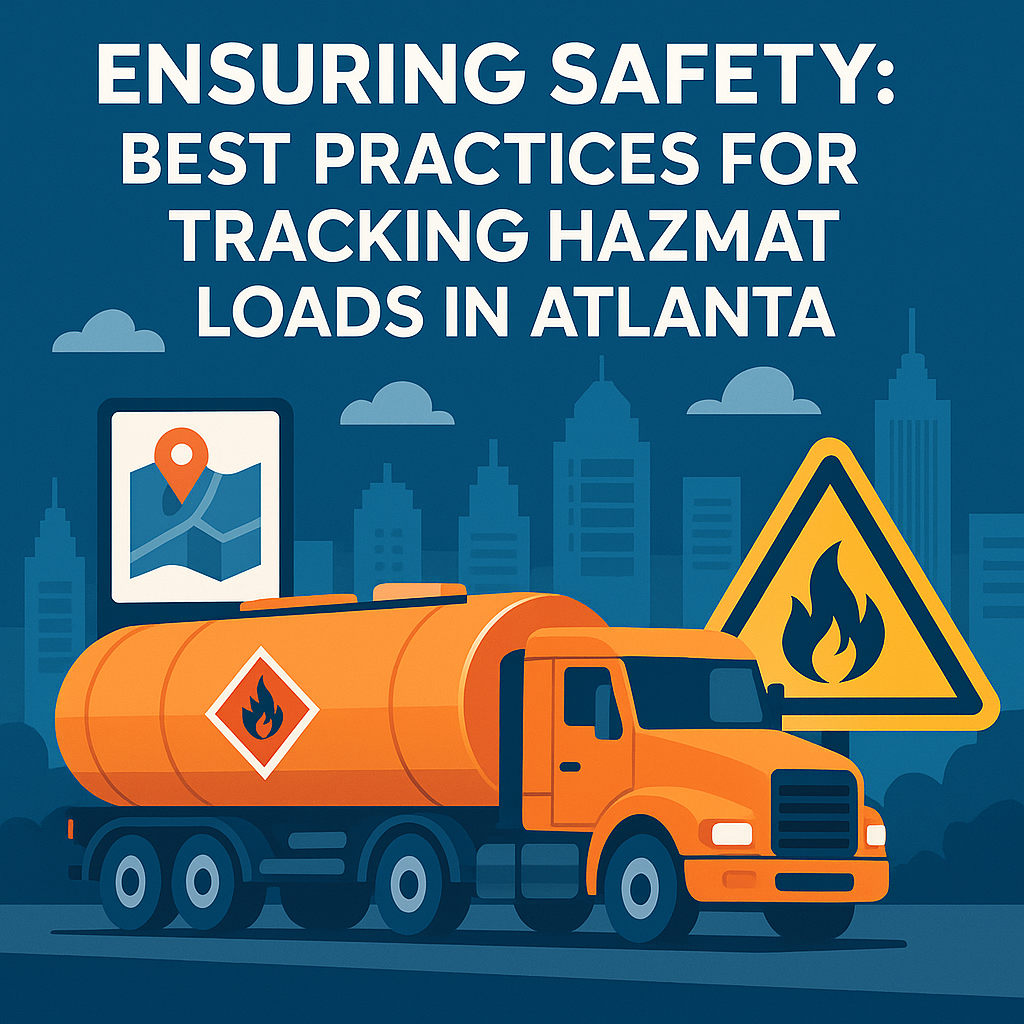
Transporting hazardous materials safely through a crowded urban area like Atlanta is not only a matter of having vehicles that are in excellent condition and drivers that are fully trained. It is a coherent approach to Atlanta hazmat tracking, hazardous load safety, and hazmat compliance monitoring ― the trifecta of keeping people, stuff, and the environment secure. In this manual, we present the suggestions that fleet managers, safety officers, and dispatchers can implement to create an excellent affinity safety program. You will learn how the right facility placarding, intensifying route surveys, and permit checks provide the foundation, while real-time alerts, containment sensors, and geo-fencing technologies give the live data necessary for prompt action. Covering MSDS integration, agreeing to keep detailed incident logs, and harmonizing emergency response statements are the keys to empowering every person on site with clear-cut and precise duties in the face of the unpredictable. Whether you manage a small number of trucks, or a massive tanker fleet, the strategies and tools recommended — with the backing of the latest regulations from the Department of Transportation (DOT) — will enable you to minimize risks, preserve compliance, and gain trust from the community. Even HMD Trucking, a good example of these layers resulting in dynamic shifts for daily operations, is proof that companies too can follow these basic principles.
Comprehending the Hazmat Status in Atlanta
Atlanta’s road network is where a big part of the action takes place: I-75, I-85, and the Downtown Connector are a few entrances to a safe transport road network. The road nodes not only transport heavy containers of hazardous materials but also allow the delivery of water, oil, and other materials. This means that cars that don’t weigh their load and make their stops can have devastating effects on the environment and the cities’ finances. Thus, hazmat compliance monitoring should start with knowing the regulatory and local contexts:
- DOT Regulations: The U.S. Department of Transportation (DOT) has strict curtailments for the packaging, handling, and documentation of every type of hazardous material.
- Permit Checks: Among hazmat loads that need special permits are overweight, oversize, or certain chemicals that must be verified before the departure of any load.
- MSDS Integration: Material Safety Data Sheets (MSDS) offer information that is very significant on handling, storage, and emergency procedures. The integration of MSDS data into the dispatch system guarantees that drivers and first responders will have the right instructions.
The blend of these elements, together with periodic trainings and audits, is the very infrastructure supporting the implementation of downstream safety tactics.
Best Practices: Placarding and Permit Checks
The proper placarding and permits are the fundamentals of the hazardous load safety management. These are the symbols used to reference and position the liquid spill control measures as well as refer back to the legal act.
- Placarding: Make sure every vehicle carries the right placards for its cargo type. Faded or incorrect markings may cause fines and slow down emergency response if a spill goes on.
- Permit Checks: Permit validation should be automated in your Traffic Management System (TMS). First, check expired permits and restriction routes before the load moves.
- Documentation Audit: Weekly snap checks of shipping papers and MSDS attachments help to catch clerical mistakes before they can result in compliance violations.

Table 1. Core Pre‑Departure Checks
| Practice | Key Benefit |
| Placarding | Instant hazard identification |
| Permit Checks | Avoids route conflicts and fines |
| MSDS Integration | Ensures proper handling instructions |
| Documentation Audit | Catches paperwork errors early |
Once you remove these from your checklists, you will cut down the chances of being stopped on the road due to wrong handling and regulatory penalties considerably.
Leveraging Technology: Real‑Time Alerts and Containment Sensors
When it comes to hazardous loads on the road, passive compliance is not enough. Today’s fleets are protected by active monitoring devices that supply hazmat compliance monitoring in real time:
- Real‑Time Alerts
- GPS trackers linked with telematics can trigger notifications for deviations from approved routes, speed excursions, or unplanned stops.
- You can integrate these alerts into your dispatch dashboard so that any red-flag events, such as leaving a geo-fenced corridor, will trigger an immediate review.
- GPS trackers linked with telematics can trigger notifications for deviations from approved routes, speed excursions, or unplanned stops.
- Containment Sensors
- The pressure and temperature sensors can be mounted on tanks or drums that consider leak detection or over-pressurization before a full-scale spill occurs.
- This data is sent to your compliance platform, allowing you to dispatch roadside assistance or reroute the vehicle.
- The pressure and temperature sensors can be mounted on tanks or drums that consider leak detection or over-pressurization before a full-scale spill occurs.
- Automated Reporting
- Create reports automatically by compiling sensor metrics, adherence to routes, and driver logs, which are included in daily summaries for your safety team.
- Create reports automatically by compiling sensor metrics, adherence to routes, and driver logs, which are included in daily summaries for your safety team.
By embedding containment sensors with real-time alerts, you create a matrix of the safest innovation that allows observation on every mile of the road.

Route Surveys and Geo‑Fencing: Mapping Safer Journeys
Gaining knowledge of the area where you are tackling cargo is essential as knowing the flora and fauna. The area’s road closures, bridges that can’t sustain the weight, and heavy traffic reduce hazardous load safety:
- Route Surveys
- Survey your routes physically and digitally before you use them. Mark unhealthy low-clear bridges, turnings, and high population areas on them.
- You should track farriers quarterly or whenever new construction projects begin.
- Survey your routes physically and digitally before you use them. Mark unhealthy low-clear bridges, turnings, and high population areas on them.
- Geo‑Fencing
- Set virtual boundaries around places that pose risks such as schools, hospitals, tunnels, or pedestrian districts and connect them to your TMS.
- If a vehicle enters or gets close to a geo-fenced area, the automated routing algorithm will suggest possible alternative paths or flag the event for a supervisor to review.
- Set virtual boundaries around places that pose risks such as schools, hospitals, tunnels, or pedestrian districts and connect them to your TMS.
This combination of thorough route surveys and dynamic geo‑fencing guarantees that drivers’ adherence to the set corridors will be left with less chance to come to sensitive locations and minimize the liability.
Emergency Response Planning and Incident Logs
Every system has its weak points. This is the reason why a good hazmat program always incorporates a strong emergency response plan and keeping good records with the help of incident logs:
- Emergency Response Coordination
- Partner with the local fire department and hazmat teams in Atlanta to share MSDS data and propose some routes.
- Conduct a training drill twice a year so your drivers and first responders know the protocols.
- Partner with the local fire department and hazmat teams in Atlanta to share MSDS data and propose some routes.
- Incident Logs
- Any incidents – even those that are common such as leaks, near-misses, or equipment faults– should be recorded into a central incident log within 24 hours.
- Classify each incident by severity, cause, and corrective action undertaken. Review incident logs every month to identify systemic shortcomings.
- Any incidents – even those that are common such as leaks, near-misses, or equipment faults– should be recorded into a central incident log within 24 hours.
- Continuous Improvement
- Input from the incident logs will assist in upgrading training, improving route surveys, and the installation of better containment sensors.
- Quarterly safety briefs should impart the lessons learned to the entire team together.
- Input from the incident logs will assist in upgrading training, improving route surveys, and the installation of better containment sensors.
The ever-living response to emergencies powered by detailed incident logs changes fire-fighting from reactive to proactive risk avoidance.
Case in Point: HMD Trucking’s Approach
HMD Trucking, being a regional carrier that is active on two of the busiest highways in Atlanta, did a significant overhaul of its program surrounding these tactics:
- Real-Time Telematics connected to the trucks and alerting a truck driver if the vehicle deviates from its given path.
- Quarterly Route Surveys that reflect updates in the construction within the I-285 area in their TMS.
- Digital Incident Logs that, as directed, are incorporated into the Learning Management System, so every driver review contains recent near-miss analyses.
HMD Trucking, since these measures were introduced, has seen a reduction in incidents by 35% as well as not having received zero fines regarding permits in the past year. This commitment to safety and compliance makes them a top choice for CDL A regional jobs Cleveland.
Conclusion
Integrated Atlanta hazmat tracking and hazardous load safety premised on the layering of simple yet effective actions that include placarding, permit checks, MSDS integration, with advanced monitoring like real-time alerts, containment sensors, route surveys, and geo-fencing. Besides the tools and rigorous hazmat compliance monitoring that includes meticulous incident logs and practiced emergency response drills, fleets, in this way, not only will they meet DOT regs but also exceed the public’s expectations for safety. The benefits are outstanding: fewer incidents, less legal risk, and a good reputation that accrues both customers and regulators over time. Start by checking your current protocols against these best practices, and you’ll quickly be on the road to a safer, more efficient operation on Atlanta’s roads.



Leave a Reply